
The Email Marketing Rumble: Constant Contact vs ConvertKit vs AWeber vs MailChimp (Who Reigns Supreme?)
I. Introduction: Where Email Marketing Reigns Supreme
In our digitally-driven world, the battle for attention is fierce. Amidst the chaos, email marketing stands tall as a trusted workhorse, connecting businesses with their audience in a personal, meaningful way. But with so many players vying for the crown, how do you choose the right email marketing platform for your needs?
Enter the arena: Constant Contact, ConvertKit, AWeber, and MailChimp. These four contenders have captured the hearts (and inboxes) of entrepreneurs worldwide. Yet, the quest to find the perfect fit can feel like a daunting journey.
II. Fighters in the Ring: A Speedy Intro
Before we dive into the nitty-gritty, let's meet our contenders:
Constant Contact: The versatile sidekick for small businesses and nonprofits, known for its user-friendly vibe and all-in-one marketing tools.
ConvertKit: The automation ace, crafted for bloggers, creators, and online course gurus seeking to turn subscribers into super fans.
AWeber: A seasoned veteran with a knack for deliverability and customer support, ready to tackle businesses of any size.
MailChimp: The big kahuna, boasting a free plan and integrations galore, making it a go-to for startups and growing empires.
III. The Battle Begins: Separating Mere Features from Game-Changers
Now that introductions are out of the way, let's break down what truly matters in the email marketing arena:
Deliverability: Ensuring Your Emails Actually Get Read
It's no secret - if your emails don't make it to the inbox, your efforts are futile. Constant Contact and AWeber go to great lengths, implementing rigorous compliance measures and hawk-eyed reputation monitoring. Meanwhile, ConvertKit and MailChimp wield cutting-edge authentication protocols and finely-tuned sender reputation algorithms.
User-Friendly Power: Keeping It Simple, Yet Effective
Let's be real, nobody wants to wrestle with a clunky interface. Constant Contact and MailChimp pride themselves on intuitive drag-and-drop builders and visual campaign editors that make email wizardry feel like child's play. While ConvertKit and AWeber pack a punch with robust features, the learning curve may feel a tad steeper.
Automation Unleashed: Putting Your Email Game on Autopilot
Time is money, and automation is the secret sauce that lets you scale your email hustle without losing your mind. ConvertKit takes the lead with automation workflows tailored for creators and course sellers. AWeber and MailChimp follow closely with robust automation capabilities, while Constant Contact keeps things simple for the automation newbies.
Laser-Focused Targeting: Hitting Bullseyes, Not Throwing Darts
Let's be honest, blasting the same message to everyone is so 2010. To truly captivate your audience, you need segmentation and targeting superpowers. MailChimp and AWeber are the champions here, letting you slice and dice your list based on countless criteria. ConvertKit and Constant Contact offer solid segmentation too, but with fewer bells and whistles.
Landing Pages & Lead Capture: The Front Line of Your Email Army
What good is an email marketing platform if you can't easily capture new leads? MailChimp, Constant Contact, and AWeber come equipped with built-in landing page and form builders to streamline your lead gen efforts. ConvertKit, on the other hand, relies on third-party integrations for this functionality.
Cost & Value: Making Sure Your Investment Pays Off
At the end of the day, budgets matter. MailChimp's generous free plan is a startup's dream, while Constant Contact and AWeber offer affordable options for small businesses. ConvertKit's pricing is tailored for creators and course sellers, ensuring you get bang for your buck if that's your target zone.
IV. The Final Showdown: Who Takes the Championship Belt?
With so many worthy contenders, there's no one-size-fits-all champion. The true victor is the platform that aligns seamlessly with your distinct business goals and audience needs:
Rookie of the Year: MailChimp and Constant Contact win big for beginners with their user-friendly interfaces and ample resources.
Bargain Hunters' Delight: AWeber and Constant Contact punch above their weight with competitive pricing for small businesses.
Automation Extraordinaire: ConvertKit takes the crown for creators and course sellers craving advanced automation firepower.
At the end of the day, the choice rests squarely on your shoulders. Do your homework, take each platform for a test drive, and seek wisdom from fellow battle-tested entrepreneurs.
V. The Underdogs: Up-and-Coming Contenders to Watch
While our four champions dominate the arena, don't sleep on the underdogs. Upstarts like Flodesk and Sendinblue are shaking up the game with fresh perspectives and innovative approaches to email marketing. Keep 'em on your radar.
VI. Parting Shots: May the Most Fitting Champion Prevail
In this ultimate email marketing showdown, there is no universal champion. The true victory belongs to the platform that equips you with the tools, features, and capabilities to conquer your unique battleground.
So go forth, fearless entrepreneur! Build your email empire, forge unbreakable connections with your audience, and watch your business soar to new heights. Just remember - the champion you choose is the one destined to propel you towards sweet, sweet success.
The 7 Components of a Magnetic Inbound Marketing Strategy
Email marketing, SEO, content creation, social media, influencer outreach, lead nurturing…
Yes, inbound marketing encompasses them all. And let’s face it – that’s enough to inspire fear in the steeliest and most seasoned of digital marketers. With so many tactics to consider and too many leads to deliver it’s easy to lose focus of what you’re trying to achieve.
That’s where a well crafted plan comes into play. Below we’ll reveal the strategic 7 step process that will help you deliver a customer-warming, boss-pleasing, prospect-loving strategy that’s achievable, realistic and bang on target.
- Define Your Persona
Inbound marketing is all about your customers – you have no business in the um… business, if you center your plan around any other silly tactics, tricks or gimmicks. The first step of your plan should, therefore, focus on understanding what makes your customers click, tick and get excited. Get to the heart of your customers’ thoughts, behaviors, problems, needs and desires by creating well-fleshed-out, fully-defined and real-to-life personas.
Use HubSpot’s (free) Make My Persona Tool to create personas worth referencing. Your entire inbound marketing strategy should be built around your core personas – you’ll storm ahead of your competition if you consult these fictional customers at every stage of your planning process. This includes when you’re creating blog posts, crafting email campaigns and conducting keyword research – you can even bring them into your brainstorm meetings to add real insight and depth to your ideas.
7 Myths About Digital Marketing That Keep You From Growing

According to eMarketer, businesses spent more than $170 billion in digital marketing in 2015. The industry is experiencing exploding growth that all businesses should tap into. However, those that lack experience are held back by some myths attached to digital marketing. And they may be keeping your business from growing. So, let’s debunk some of the myths holding you back from getting the maximum results from your online marketing.
Myth 1: SEO is dead
Truth: SEO’s obituary has been written many times. SEO has evolved but is far from being dead. What worked in 2010 doesn’t work in 2016, and what works this year may change in the next couple of years. You just have to keep on top of the trend. SEO is a great form of marketing as it brings in people that are actually searching for your content. But with lots of websites creating great content, it is a struggle to rise to the top. Big brands spend hundreds of thousands of dollars on their SEO campaigns. You need to be strategic if you want to compete.
Myth 2: Social media only works for few industries
Truth: Every industry can benefit from social media profiles. Social media is all about connecting with your customers and spreading the word about your business. Social media can be a powerful and efficient channel for just about any industry. Strategic implementation of social media marketing can bring exposure, open communication and provide returns. But not all social media channels are equal and you shouldn’t put equal emphasis on all of them. If you’re a B2B or B2C company, you need to find the social network that suits your business. For instance, while Facebook, LinkedIn and Twitter may be best for a B2B company, other social media sites like Instagram, Pinterest, Facebook work better for a B2C retailer. Similarly, service companies need to approach social media differently than a retailer.
Read more at http://www.business2community.com/digital-marketing/7-myths-digital-marketing-keep-growing-01574215#d10rOVyZQYMsKdPT.99
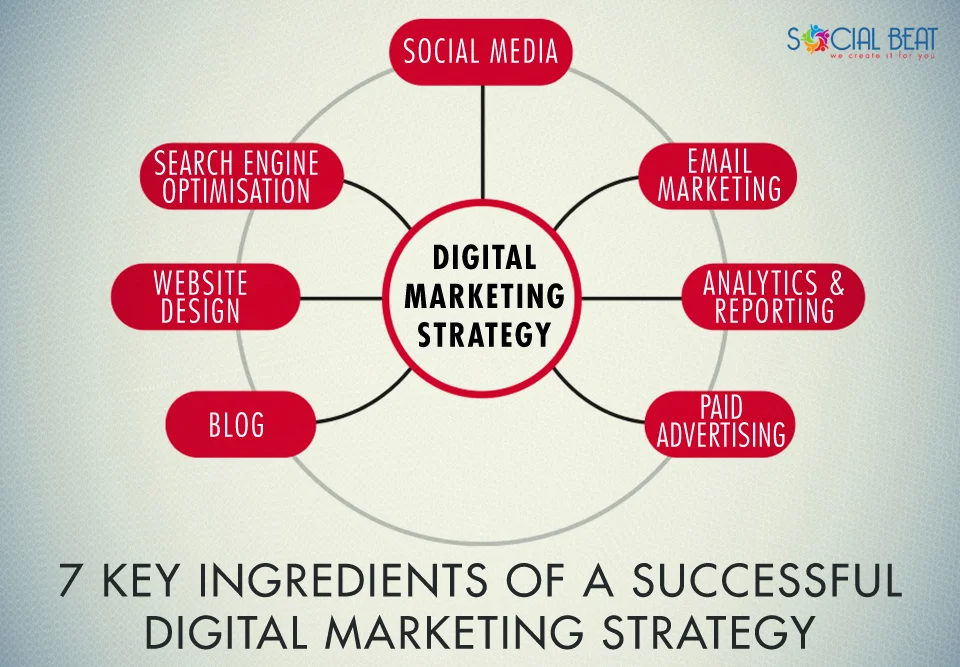
7 Key Ingredients Of A Successful Digital Marketing Strategy
In today’s rapidly changing marketing landscape, digital marketing has become an indispensable part of a business’ overall marketing strategy. Most marketers today have understood the importance of digital marketing and the mammoth difference that a well-executed, result-oriented digital strategy could make to the overall growth and profitability of a business. Going by the Marketing Budgets 2014 Report, 71% of companies surveyed are planning to increase the amount they invest in digital marketing this year.
Crafting a Result-Oriented Digital Strategy
Crafting a winning digital plan entails understanding the business in and out, clearly defining its goals and drawing up a profile of its target audience. All these differ from business to business and hence there is no one size fits all strategy. However, there are certain key ingredients listed below which must be effectively incorporated into every digital strategy to successfully drive business growth. Continue Reading.